

Repaint Your Coastal NC Home: How Often?
Home Maintenance, Exterior Painting, Coastal North Carolina
How Often Should You Repaint Your Coastal North Carolina Home?
As a local residential painting company serving Brunswick County, NC, we’re often asked one big question: “How often should I repaint the exterior of my home?” The honest answer is, it depends—especially here on the coast, where humidity, sun, rain, and salt air are constantly working against your paint. In this guide, we’ll walk through what really affects paint lifespan in coastal North Carolina, how to spot when your home is due for a repaint, and simple maintenance steps that can help you get the most out of every paint job.
General Repainting Timelines for Coastal North Carolina Homes
Along the Brunswick County coast, a realistic repaint schedule is usually every 5–7 years for most homes. Some well-protected, well-maintained homes can stretch to 8–10 years, while others exposed to full sun and ocean breezes may need attention closer to the 4–5 year mark. The exact timing depends on a combination of factors:
Local microclimate (how close you are to the water, wind exposure, shade)
Siding material (wood, fiber cement, stucco, vinyl, etc.)
Quality of the last paint job (prep, products, number of coats)
Instead of focusing only on the calendar, it’s helpful to understand what’s actually wearing your paint down. That way, you can catch problems early and repaint before damage reaches the siding underneath.
How Humidity Shortens Paint Lifespan Near the Coast
Coastal North Carolina is humid almost year-round. High humidity means the air is holding a lot of moisture, and that moisture constantly interacts with your home’s exterior. Over time, humidity can:
Slow drying and curing when paint is first applied, leading to a weaker paint film if timing and conditions aren’t managed carefully.
Encourage mildew and mold growth on shaded, damp areas, especially on the north side of a home or near landscaping that traps moisture.
Cause wood to swell and shrink, putting stress on the paint film and leading to cracking and peeling over time.
Choosing paints with mildew-resistant additives, controlling moisture issues, and repainting before the coating fully breaks down are key to staying ahead of humidity-related damage.
Sun Exposure: Fading, Chalking, and Brittleness
The coastal sun is strong, and UV rays are one of the biggest enemies of exterior paint. On south- and west-facing walls, you’ll typically see faster wear. Sun exposure can:
Fade colors, especially darker or more vibrant shades, making your home look tired even if the paint is still intact.
Cause chalking, a powdery residue on the surface as the paint’s binder breaks down under UV light.
Make paint brittle, which can lead to cracking and peeling when the siding expands and contracts.
High-quality exterior paints are formulated with better UV resistance and color retention. That’s one reason they cost more—but in our climate, they often pay for themselves by lasting longer and looking better between repaints.
Rain and Storms: Repeated Wetting and Drying Cycles
Brunswick County sees its share of heavy rain, thunderstorms, and tropical-weather systems. Frequent wetting and drying cycles put constant stress on your paint and siding. Over time, this can:
Drive water into small cracks and unsealed gaps, leading to hidden wood rot or swelling behind the paint layer.
Wash away protective resins on lower-quality paints, causing the surface to break down faster.
Expose any weak spots in caulking around windows, doors, and trim, which can then allow more water intrusion.
A sound paint job acts as a water-shedding shell for your home. Once you see that shell cracking or peeling, it’s time to plan for repainting before repeated storms cause deeper damage.
Salt Air: The Coastal Factor You Can’t Ignore
Homes close to the ocean face an extra challenge: salt-laden air. Salt particles carried by the wind can settle on siding, trim, and metal surfaces. Over time, salt can:
Attract and hold moisture against the surface, keeping areas damp longer after rain or dew.
Accelerate corrosion on metal railings, fasteners, and hardware, which can stain or damage surrounding paint.
Interfere with paint adhesion if not properly washed off before painting.
Regular rinsing and thorough washing before any repaint are especially important for ocean-facing homes. In some high-exposure areas, repainting every 4–5 years is wise, even with premium coatings.
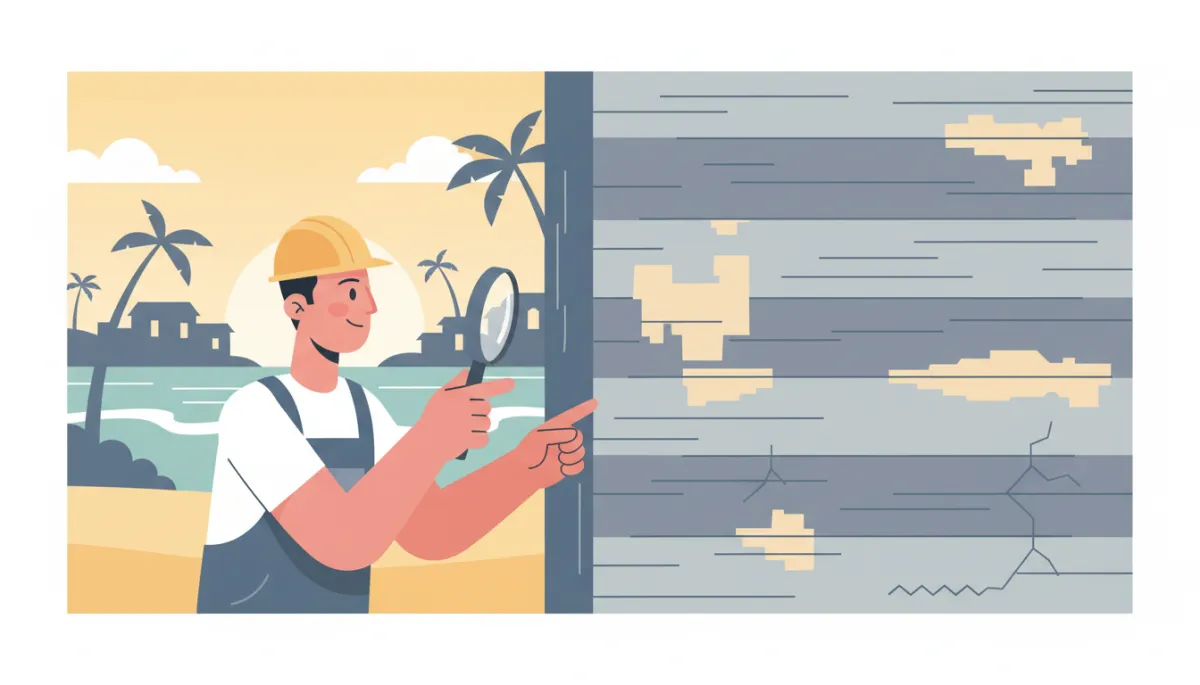
Early signs of failure are your cue to repaint before moisture reaches the siding.
How Siding Material Influences Paint Longevity
Different siding materials hold paint differently, and that affects how often you’ll need to repaint:
Wood siding: Beautiful but more vulnerable to moisture and sun. In our climate, expect 4–7 years depending on exposure and maintenance. Keeping wood sealed and caulked is critical.
Fiber cement (Hardie-style) siding: Very stable and holds paint well. With good prep and products, you may see 7–10 years between repaints, sometimes more on shaded sides.
Stucco: Typically repainted every 6–9 years. Hairline cracks should be addressed before painting to keep water out of the substrate.
Vinyl siding: Technically doesn’t “need” paint for protection, but many homeowners paint for color. High-quality vinyl-safe paints can last 7–10 years, depending on color choice and sun exposure.
Knowing your siding type and its typical repaint cycle gives you a helpful baseline, which you can then adjust based on exposure and condition.
Why Paint Quality and Preparation Matter So Much
Two homes on the same street can have very different repaint schedules, simply because of the products and prep work used last time. In our experience, these factors have a huge impact on how long a paint job lasts:
Paint Quality
Higher-quality exterior paints contain more durable binders and pigments, better UV resistance, and often superior mildew resistance. In coastal North Carolina, that can translate into:
Longer color retention and less fading on sunny sides.
Better adhesion to properly prepared surfaces, reducing peeling and flaking.
Improved resistance to chalking, mildew, and moisture intrusion.
Surface Preparation
Even the best paint will fail early if it’s applied over a dirty, glossy, or failing surface. Proper prep typically includes:
Thorough washing to remove dirt, chalk, mildew, and salt—often with a mild cleaning solution, not just water.
Scraping and sanding any loose or peeling paint to a sound edge, so the new paint can bond properly.
Priming bare areas and stained spots with the right primer for the material and condition.
Re-caulking joints and gaps around windows, doors, and trim to seal out water.
Cutting corners on prep might save time up front, but it almost always shortens the life of the paint job—especially in a demanding coastal environment.
Clear Signs Your Home Is Ready for Repainting
Instead of waiting for a specific year, use your home’s appearance and condition as your guide. It’s time to plan a repaint if you notice:
Peeling or flaking paint, even in small areas. This means the protective layer has failed and water can reach the siding.
Cracking or “alligatoring”—a pattern of small cracks that often shows up on older paint jobs or heavily sun-exposed areas.
Faded or chalky color. Rub your hand across the siding; if you get a dusty residue, the paint is breaking down.
Exposed bare wood or substrate, even in small spots, which can quickly lead to rot in our humid, rainy climate.
Mildew or algae stains that return quickly after cleaning, indicating the coating isn’t resisting growth well anymore.
Catching these signs early usually means less repair work and a smoother, longer-lasting repaint.
Practical Maintenance Tips to Extend the Life of Your Paint
Even in a tough coastal climate, you can help your exterior paint job last closer to the upper end of its lifespan with a few simple habits:
Rinse your home annually. A gentle rinse with a garden hose (or low-pressure wash) helps remove salt, dirt, and mildew spores before they build up and stain or damage the paint.
Trim back landscaping. Keep shrubs, vines, and trees a few feet away from the siding so air can circulate and surfaces can dry after rain.
Check caulking yearly. Walk around your home and look for cracked or missing caulk around windows, doors, and trim. Touch up as needed to keep water out.
Spot-prime problem areas. If you see a small bare patch after a storm or repair, priming and painting that spot promptly can keep it from spreading into a larger issue.
Schedule periodic inspections. Every year or two, take a slow, careful look at your exterior—or have a professional do it—and note any changes, however small.
These small steps don’t take much time, but they can delay the need for a full repaint and help protect the underlying structure of your home.
Putting It All Together: A Smart Repainting Plan for Coastal Homes
For homeowners in Brunswick County and along the North Carolina coast, a practical approach is to:
Know your baseline. Based on your siding type and exposure, estimate a repaint window—often 5–7 years for coastal homes.
Inspect annually. Look for peeling, cracking, chalking, fading, mildew, and failed caulk. Don’t wait for widespread failure before taking action.
Invest in quality. When it’s time to repaint, prioritize solid prep work and high-quality exterior paints designed for humid, coastal conditions.
Repainting on time isn’t just about curb appeal; it’s one of the best ways to protect your biggest investment from the unique challenges of coastal North Carolina weather. With a thoughtful schedule, good products, and simple maintenance, your home’s exterior can stay beautiful and well-protected for years at a time—despite the humidity, sun, rain, and salt in the air.